The older kids spoke with reverence for their recent hits: “Breaking the Law,” “Livin’ After Midnight,” “Hellion/Electric Eye,” “Heading Out to the Highway,” and especially “You’ve Got Another Thing Comin’.” But some of us had a different point of entry into the music of Judas Priest. My introduction was the third and final single for the “Defenders of the Faith” album.
The “Love Bites” music video was electrifying, even on my tiny black and white TV. It was the song itself that held me rapt, more than the visuals: the ominous, booming tones of the intro, that exotic guitar melody, the low-key palm-muted riff and bass behind the verse, the heavy leads in the bridge, the earworm chorus. I was also transfixed by the sounds Rob Halford made with his voice – – how was that humanly possible? Also, why wasn’t his hair long, like everyone else’s? Judas Priest were established Traditional Metal Gods by now, but this song and video felt subversive to the genre, in all of the right ways.
The “Defenders of the Faith” cassette tape was soon mine, getting frequent turns in the boombox. My appreciation for it grew outward from “Love Bites;” I was enamored of the balladry in “Some Heads Are Gonna Roll” and “When the night Comes Down,” the grandeur of the title track and outro. The only song I had little use for was “Eat Me Alive.” It’s grown on me over the years, but at the time, it just felt a little silly and simplistic.* I had no inkling as to what the song was actually about, and had no idea it was to become the second-most notorious song in their catalogue,** when the PRMC named it as one of their “filthy 15,” claiming that it was detrimental to young listeners.***
Flipping the tape over, I soon became obsessed with the furious speed and power of “Freewheel Burning,” a song that felt even more revolutionary and boundless than “Love Bites.” This one blazes with scorching heat. The tracks that followed, “Jawbreaker” and “Rock Hard, Ride Free,” were consistently excellent, but I soon found my ultimate favorite at the end of album side 1. “The Sentinel” not only portrayed vivid lyrical scenes of Cyberpunk black magic violence, but the guitar parts sounded like I’d known them my entire life. Classic-era Priest guitarists, K.K, Downing and Glenn Tipton, excelled at this. Some of their most iconic guitar riffs seem like they were written in the firmament of the universe, like they’ve always existed and always will: “The Hellion,” “Breaking the Law,” “Painkiller,” “The Ripper.”
Many viewed “Defenders of the Faith” as the end of an era for Judas Priest, as their followup would be “Turbo,” a venture with prominent synthesizer sounds and catchier, more radio-friendly songs. Reactions were divided for Priest fans, to say the least. Personally, I don’t think the “Turbo” experiment worked, but that album has “Turbo Lover” and “Out in the Cold,” so it’s still a small victory.
I viewed “Defenders” as the perfect starting point for my lifelong Judas Priest fandom. Further exploration through their 1970s albums and their imperial run in the early 1980s unearthed a number of classics and incredible deep cuts: “Victim of Changes,” “Beyond the Realms of Death,” “The Ripper,” “The Rage,” featuring Ian Hill’s incredible bass line, “Steeler,” – – No, no, I have to stop there. I’ll be typing all night. Go and listen for yourself.
As for the stuff that followed. . .
After “Turbo” and the mixed bag album, “Ram It Down,” 1990’s “Painkiller” saw them embrace a modernized, heavier take on the classic Priest sound, backstopped by new drummer, Scott Travis, who is still with the band today. In the years after that, Priest were sometimes benefactors, sometimes victims of changes – – including Rob Halford’s departure, leading to his offshoot projects under Fight, 2wo, and his own name. There were some missteps, sure, but also plenty of great songs to be found on just about every Priest album, including the ones with Ripper Owens on the mic. And yes, even on fucking “Nostradamus.”****
With a legacy as long and strong as Judas Priest’s, you’ll find many different answers from different fans across the parking lot about their best album. Many will cite “British Steel,” others will Scream for Vengeance, some might say “Hell Bent for Leather,” still others will call out “Painkiller.” None of them are wrong, but if you ask me, Priest were at their best on “Defenders of the Faith.”***** No denying, this is a Hall of Fame album from a Hall of Fame band.
Judas Priest were inducted into the Metal Hall of Fame in 2018, at the Wacken Open Air Festival in Germany.
Jack Mangan is best known in the Metal world as lead author/project runner for the “Am I Evil?” graphic novel, as a journalist with MetalAsylum.net and the official Metal Hall of Fame. and also as co-host of the popular (sporadic these days) Metal Hall of Fame and MetalAsylum.net livestreams with Rich Catino. He’s made a few guest appearances as a panelist on The Metal Voice. In an adjacent life, he was a podcast pioneer, with numerous appearances on Technorama, Dragon Page, Escape Pod/Pseudopod, and many others, including his own productions: Jack Mangan’s Deadpan, and the Podcast novel, “Spherical Tomi.” Friend him on Facebook if you can find him, but be warned: he’s not great about checking Facebook Messenger.
~~~~~~~~~~~
*”Eat Me Alive” IS silly and simplistic, but who cares?
**The MOST notorious JP song is their cover of Spookytooth’s “Better By You, Better Than Me” on the “Stained Class” album. If you never heard the awful story: Judas Priest were blamed for the suicide pact of two young men in Nevada. It was alleged that the words, “Do it,” could be heard if you played “Better By You, Better Than Me” backwards, and that this was an instruction for listeners to kill themselves. It went to a U.S. court and everything. Fortunately, the case was dismissed.
***Idiots.
****“Nostradamus” is widely derided in Priest fandom, but there are a few of us who defend the faith. Rob Halford believes the album will someday find the appreciation it deserves, and I, for one, hope that his prediction is right. It’s excellent.
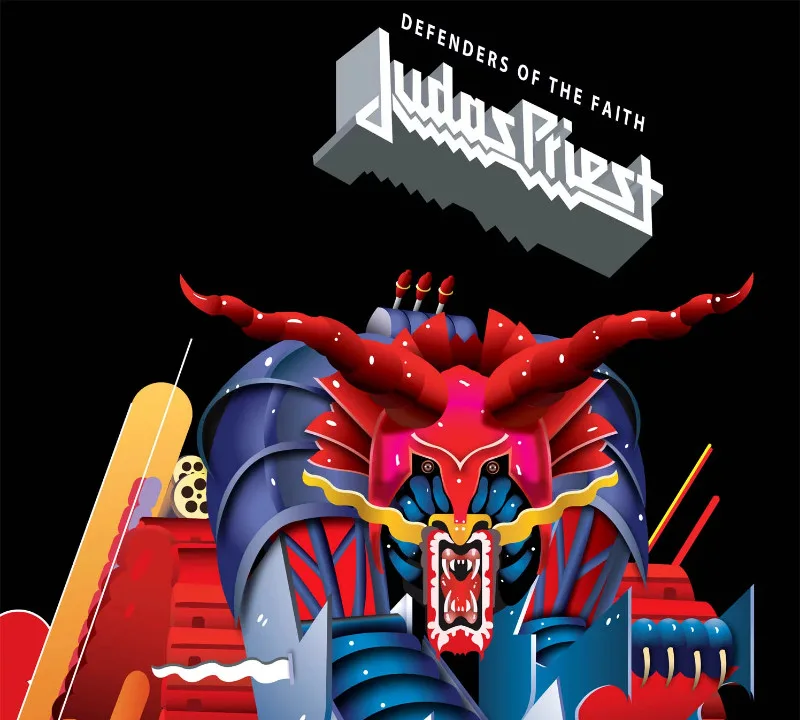
*****In addition to being a near-perfect 40 minutes of Heavy Metal, “Defenders of the Faith” boasts the iconic Metallian tank-battlecat-thing, second only to the “Screaming for Vengeance” as Judas Priest’s greatest album cover. Artist Doug Johnson created both of these images, as well as the hand on the stick shift tornado for “Turbo.” (See https://wearethemutants.com/2017/10/17/judas-priest-album-covers-by-doug-johnson-1982-1986/)
heavy metal music, rob halford, judas priest, sad wings of destiny, defenders of the faith, screaming for vengeance, painkiller, glenn tipton, british steel, killing machine, rocka rolla, ram it down, victim of changes, redeemer of souls, priest, angel of retribution, breaking the law, living after midnight, firepower, ian hill, black sabbath, nostradamus, stained class, unleashed in the east, steel, riff, beyond the realms of death, hard rock, freewheel, heading out to the highway, al atkins, jawbreaker, the green manalishi, soul, parents music resource center, point of entry, touch of evil, rock and roll, sin after sin, hellion, leather, favorite, dave holland, speed metal, some heads are gonna roll, jugulator, classic rock, devil, les binks, scott travis, faith, richie faulkner, thrash metal, van halen, synthesizer, tom allom, heat, epitaph world tour, ballad, new wave of british heavy metal, columbia records, hell, double album, simon phillips, lead, punk rock, sin, deep purple, pop music, progressive rock, defender of the faith
Frequently Asked Questions
What song of the album Defenders of the Faith Judas Priest?
The song from the album "Defenders of the Faith" by Judas Priest is widely recognized as "Freewheel Burning," known for its fast-paced guitar riffs and powerful vocals, encapsulating the essence of heavy metal music.
What is on the cover of Defenders of the Faith?
The cover of "Defenders of the Faith" features a striking image of a metallic knight, symbolizing strength and resilience, set against a dark, fiery background that represents the powerful themes central to Judas Priest's music.
Who produced Defenders of the Faith Judas Priest?
The producer of "Defenders of the Faith" by Judas Priest is Tom Allom. He played a crucial role in shaping the album's iconic sound, contributing to the band's legacy in heavy metal music.
What songs are on Defenders of the Faith by Judas Priest?
The songs on "Defenders of the Faith" by Judas Priest include iconic tracks such as "Freewheel Burning," "Jawbreaker," "Rock Hard Ride Free," and "Metal Gods," showcasing the band's powerful sound and metal mastery.
What gear was used on Judas Priest Defenders of the Faith?
The gear used on Judas Priest's "Defenders of the Faith" includes iconic instruments like the Gibson Les Paul and Fender Stratocaster guitars, complemented by Marshall amplifiers that helped define the album's powerful sound.
What themes are explored in Defenders of the Faith?
The themes explored in "Defenders of the Faith" include the struggle for personal freedom, the battle against oppression, and a celebration of strength and resilience in the face of adversity, all encapsulated within powerful heavy metal anthems.
How was Defenders of the Faith received critically?
The critical reception of "Defenders of the Faith" was largely positive, with many praising its powerful sound and the band's musicianship, solidifying Judas Priest's status as heavy metal icons and contributing to the album's enduring legacy in the genre.
Which tracks are fan favorites on the album?
Fan favorites on the "Defenders of the Faith" album include iconic tracks like "Freewheel Burning," "Jawbreaker," and the powerful anthem "Some Heads Are Gonna Roll," each showcasing Judas Priest's signature sound and contributing to the album's lasting impact in heavy metal.
What is the significance of the album art?
The significance of the album art lies in its powerful visual representation of the themes and ethos of the "Defenders of the Faith" album. It encapsulates the bold, rebellious spirit of heavy metal, reflecting Judas Priest's iconic status and connection with their fans.
How does Defenders of the Faith compare to other albums?
Defenders of the Faith stands out among Judas Priest's albums for its powerful anthems and heavier sound, showcasing the band’s signature style and solidifying their influence in heavy metal, while also displaying an impressive evolution from their earlier works.
What influences shaped the sound of Defenders of the Faith?
The influences that shaped the sound of "Defenders of the Faith" include the evolving heavy metal scene of the early 1980s, the band's signature twin guitar harmonies, and themes of resilience and valor, reflecting Judas Priest's commitment to the genre's spirit.
Which songs showcase the bands musical evolution?
The songs that showcase the band's musical evolution include "Rapid Fire," "Beyond the Realms of Death," and "Electric Eye," highlighting their transition from classic heavy metal to more intricate compositions and themes throughout their career.
How did Defenders of the Faith impact heavy metal?
The impact of "Defenders of the Faith" on heavy metal is profound; it solidified Judas Priest's role as pioneers of the genre, influencing countless bands with its powerful riffs, thematic depth, and a blend of melody and aggression that defined heavy metal's evolution.
What live performances feature tracks from the album?
The live performances that feature tracks from the "Defenders of the Faith" album include Judas Priest's memorable concerts during the "Defenders of the Faith" tour in 1984, as well as highlights from various subsequent tours celebrating their classic hits.
What stories inspired the lyrics on the album?
The stories that inspired the lyrics on "Defenders of the Faith" include themes of perseverance, valor, and the battle against oppression, reflecting the band's commitment to empowering listeners through the spirit of heavy metal.
Who are the other members featured in the album?
The other members featured in the "Defenders of the Faith" album include iconic guitarist Glenn Tipton, bassist Ian Hill, drummer Dave Holland, and legendary vocalist Rob Halford, all contributing to the album's signature heavy metal sound.
What studio techniques were used in recording?
The studio techniques used in recording "Defenders of the Faith" included multi-track recording, layered guitar harmonies, and innovative use of reverb and effects, all contributing to the album's powerful sound and dynamic production quality.
How does the album reflect the bands identity?
The album reflects the band's identity by showcasing Judas Priest's signature sound, emphasizing themes of empowerment and resilience, while blending powerful guitar riffs and soaring vocals that have defined their influence in heavy metal music.
When was Defenders of the Faith released?
The release date of "Defenders of the Faith" is an important milestone in heavy metal music. The album by Judas Priest was officially released on January 4, 1984.
What awards or nominations did the album receive?
The awards and nominations received by the album "Defenders of the Faith" include its recognition as a classic heavy metal record, reflecting its influence and impact within the genre, especially from fans and critics alike.
How did fans react to the albums release?
Fans reacted to the album's release with overwhelming enthusiasm, celebrating its powerful sound and iconic tracks, which further solidified Judas Priest's status in the heavy metal genre and deepened their connection with the band's music.
What is the legacy of Defenders of the Faith?
The legacy of "Defenders of the Faith" is its embodiment of heavy metal's defining sound and themes, solidifying Judas Priest's status as pioneers in the genre while inspiring countless musicians and fans with its powerful anthems and enduring spirit.
Which producers worked on the albums production?
The producers who worked on the album's production are Tom Allom and Judas Priest themselves, contributing significantly to the iconic sound of "Defenders of the Faith.
What other artists cite this album as an influence?
Many modern metal artists cite "Defenders of the Faith" as a significant influence, including bands like Metallica, Slayer, and Pantera, who have all acknowledged its impact on their sound and songwriting.
How many copies did Defenders of the Faith sell?
The sales figures for "Defenders of the Faith" indicate that the album has sold over 2 million copies worldwide, solidifying its status as a classic in the heavy metal genre.
What are the standout solos on the album?
The standout solos on the "Defenders of the Faith" album include the electrifying performances in tracks like "Freewheel Burning" and "Beyond the realms of Death," showcasing Glenn Tipton and K.K. Downing's unparalleled guitar prowess that defines Judas Priest's legendary sound.
What critical analysis exists for Defenders of the Faith?
Critical analysis of "Defenders of the Faith" highlights its blend of traditional heavy metal elements and thematic depth, though some critiques point to its perceived lack of innovation compared to previous albums. Overall, it's celebrated for its powerful sound and vocal mastery.
Which tracks showcase the bands technical skill?
The tracks that showcase the band's technical skill include "Freewheel Burning," with its fast-paced guitar riffs and intricate solos, and "The Sentinel," known for its complex rhythms and harmonized lead guitars.
How did the album perform on international charts?
The album's performance on international charts was impressive, achieving notable positions in various countries, including reaching the top 20 in the UK and establishing a strong presence in the US Billboard 200, solidifying its legacy in heavy metal.
What makes Defenders of the Faith a classic?
The qualities that make "Defenders of the Faith" a classic include its powerful songwriting, iconic guitar riffs, and the band's signature blend of heavy metal elements. The album's themes of strength and resilience resonate deeply with fans, solidifying its enduring legacy in heavy metal history.
defenders of the faith band, judas priest defenders of the faith, defenders of the faith, judas priest defenders of the faith songs, judas priest defender of the faith, defenders of faith
Significance of "Defenders of the Faith" in Heavy Metal History
"Defenders of the Faith" stands as a pivotal album in the annals of heavy metal, marking a high point in Judas Priest's career. Released in 1984, it encapsulates the band's signature sound, blending powerful riffs, soaring vocals, and intricate melodies that resonate with fans and critics alike. This album not only solidified Judas Priest's status as heavy metal legends but also influenced countless bands and shaped the genre's evolution.
The album's tracks, such as "Breaking the Law" and "Freewheel Burning," showcase the band's ability to craft memorable anthems while pushing musical boundaries. The thematic depth of the lyrics and the technical proficiency displayed in the instrumentation have led to "Defenders of the Faith" being celebrated as a quintessential heavy metal record, often cited in discussions about the greatest albums of all time.
Track-by-Track Analysis of "Defenders of the Faith"
A detailed exploration of each track on "Defenders of the Faith" reveals the album's rich tapestry of musical styles and lyrical themes. From the energetic opener "Freewheel Burning" to the haunting ballad "Some Heads Are Gonna Roll," every song contributes to the album's narrative arc and emotional weight. This track-by-track analysis not only highlights the technical prowess of the band but also provides insights into the songwriting process and the influences behind each piece.
The Legacy of Judas Priest and Its Influence on Future Generations
The impact of Judas Priest extends far beyond their own discography, as their pioneering sound has influenced a multitude of artists across various genres. The band's ability to blend heavy metal with elements of rock, punk, and even pop has inspired countless musicians and shaped the landscape of modern music. Their signature style, characterized by dual guitar harmonies and operatic vocals, has become a blueprint for aspiring metal bands.
Artists like Metallica, Iron Maiden, and even contemporary acts such as Avenged Sevenfold credit Judas Priest as a major influence in their music. The legacy of "Defenders of the Faith" continues to resonate today, as new generations of fans discover the album's timeless appeal and the band's enduring contributions to the heavy metal genre.
Visual and Artistic Elements of the Album
The artwork of "Defenders of the Faith," featuring the iconic Metallian tank-battlecat, plays a crucial role in the album's identity and appeal. Created by artist Doug Johnson, the cover art not only captures the essence of heavy metal aesthetics but also complements the themes explored within the music. Such striking visuals have become synonymous with the band's image and have contributed to the album's cult status among fans.
The album cover's bold imagery and vibrant colors reflect the energy and intensity of the music, making it an unforgettable visual representation of the era. The significance of album art in the heavy metal genre cannot be overstated, as it often serves as a first impression for potential listeners and a lasting symbol for fans. "Defenders of the Faith" exemplifies this connection between music and visual artistry, further solidifying its place in heavy metal history.
rock music, heavy metal music, rock and roll, rock and roll hall of fame, hard rock, dimebag darrell, jeff young, arch enemy, megadeth, fear factory, eddie trunk, sebastian bach, judas priest, doyle wolfgang von frankenstein, misfits, black sabbath, rikki rockett, steve vai, thrash metal, pantera, nonprofit organization, metal church, twisted sister, guitarist, chris poland, concert, genre, ronnie james dio, kill devil hill, poison, progressive rock, bruce dickinson, joe satriani, red carpet, alice cooper, ceremony, the rolling stones, volbeat, deep purple, yngwie malmsteen, quiet riot, slayer, foreigner, tom morello, punk rock, metal hall of fame, heavy music awards, bring me the horizon, spiritbox, grammy awards, grammy award for best metal performance, metal, medal, engraving, gojira, silver, pearl jam, alternative rock, empire, bronze, jazz, anode, coat, crystal, loudwire, sculpture, sleep token, knocked loose, bloodstock open air, dream theater, idles, meshuggah, kentish town, oli sykes, bad omens, heavy metal genres, music genre, electric callboy, matt cameron, o2 forum kentish town, tré cool, dark matter, joe duplantier, custom awards, heavy, award, awards, latin, jade, green day, behemoth, atlantic ocean, country music
Frequently Asked Questions
Is there a metal rock hall of fame?
The Metal Hall of Fame exists to honor and preserve the legacy of musicians who have made significant contributions to the metal and hard rock genres.
Is Metallic in the hall of fame?
Metallica is indeed honored in the Metal Hall of Fame, recognizing their significant contributions to the metal music genre and their lasting impact on the music culture.
What criteria are used for induction?
The criteria used for induction into the Metal Hall of Fame include significant contributions to the metal and hard rock genres, lasting influence on music culture, and accomplishments that resonate with fans and fellow musicians alike.
How can fans support the Metal Hall?
Fans can support the Metal Hall by attending events, purchasing tickets, donating, and spreading the word about our mission to celebrate the contributions of metal and hard rock legends. Your support helps preserve this vital music heritage.
Who are the current inductees this year?
The current inductees this year are a distinguished group of musicians and industry legends celebrated for their significant contributions to metal and hard rock. For the complete list of this year's inductees, please visit our official announcements page.
What events are planned for this year?
This year, the Metal Hall of Fame is excited to host several events, including our highly anticipated annual gala, where we will honor new inductees and celebrate the contributions of metal legends to music culture.
Where is the Metal Hall of Fame located?
The Metal Hall of Fame is located in the United States, with its events held at various venues across the country. For specific event locations, please check the announcements on our website.
How can artists get nominated for induction?
The nomination process for artists to be inducted into the Metal Hall of Fame involves a review by our committee, which considers their contributions and impact on the metal and hard rock genres. Interested parties can submit nominations through our official website.
What impact has the hall had on artists?
The impact of the Metal Hall of Fame on artists is profound, as it acknowledges their contributions, elevates their legacy within the music community, and inspires new generations of musicians to pursue their craft with passion and dedication.
Are there any upcoming announcements for inductees?
Upcoming announcements for inductees will be made soon, so stay tuned for exciting news about new members joining the Metal Hall of Fame. Check our website regularly for updates and event details.
How can I attend the induction ceremony?
Attending the induction ceremony is easy. You can secure tickets by visiting our official website, where you'll find details on the upcoming event, ticket availability, and pricing information.
What is the history of the Metal Hall?
The history of the Metal Hall of Fame dates back to its founding as a non-profit organization aimed at honoring the influential musicians and industry figures who shaped the metal and hard rock genres, celebrating their enduring legacy.
Who is eligible for nomination in 2025?
Eligibility for nomination in 2025 includes musicians and industry legends who have made significant contributions to the metal and hard rock genres throughout their careers.
What is the significance of the Metal Hall?
The significance of the Metal Hall lies in its role as a vital institution that honors and preserves the contributions of musicians and industry legends who shaped the metal and hard rock genres, celebrating their enduring impact on music culture.
Are there merchandise sales for the hall?
Merchandise sales for the Metal Hall of Fame are available, offering a range of items that celebrate the legacy of metal and hard rock musicians. Check our website for the latest products and updates.
How often does the hall announce new inductees?
The Metal Hall of Fame announces new inductees annually, typically coinciding with the dates of its gala event. Keep an eye on our website for updates on upcoming inductee announcements.
What genres are included in the Metal Hall?
The genres included in the Metal Hall encompass a wide range of subgenres within metal and hard rock, recognizing artists who have made significant contributions to classic metal, thrash, death metal, glam rock, and more.
Who founded the Metal Hall of Fame?
The Metal Hall of Fame was founded by a group of passionate metal musicians and industry professionals, led by its visionary founder, Pat Gesualdo, who aimed to honor and preserve the legacy of metal music pioneers.
What is the mission of the Metal Hall?
The mission of the Metal Hall is to honor and preserve the legacy of musicians and industry legends who have greatly influenced the metal and hard rock genres, celebrating their significant contributions to music culture.
How can I volunteer at Metal Hall events?
Volunteering at Metal Hall events is a great way to get involved. To sign up, visit our website and fill out the volunteer application form found in the Events section, or contact us directly for more information.
Are there any documentaries about the Metal Hall?
Documentaries about the Metal Hall of Fame do exist, showcasing its mission and the contributions of inducted legends to the metal and hard rock scenes. Be sure to check our website for updates on available films and features.
How does the voting process work for nominations?
The voting process for nominations involves a selection committee that reviews eligible candidates and compiles a list of nominees. Members of the Metal Hall of Fame then vote to determine the inductees, ensuring a fair and transparent selection.
What community outreach does the Metal Hall conduct?
The community outreach conducted by the Metal Hall focuses on music education programs, supporting local musicians, and promoting charity events that benefit various causes within the metal community, fostering connections and enriching cultural appreciation.
Are there any scholarships offered by the hall?
The Metal Hall of Fame does not currently offer scholarships. However, we encourage aspiring musicians and industry professionals to stay tuned for future initiatives and opportunities that may support education in the metal genre.
What is the process for proposing an inductee?
The process for proposing an inductee involves submitting a nomination form detailing the individual's contributions to metal and hard rock. Nominations are reviewed by our selection committee, which evaluates each candidate based on their impact and legacy in the music industry.
How has the hall influenced metal culture?
The influence of the Hall on metal culture is significant, as it honors and preserves the legacies of iconic musicians, fostering appreciation and awareness of their contributions while inspiring future generations of metal artists and fans alike.
What special exhibitions are hosted at the hall?
The special exhibitions hosted at the Metal Hall of Fame celebrate the legacy of influential metal and hard rock artists, showcasing memorabilia, artwork, and interactive displays that highlight their contributions to music culture.
Are fans allowed to vote for inductees?
Fans are allowed to vote for inductees. Your participation in the voting process is welcomed and encouraged, as it helps to honor the artists who have significantly impacted the metal and hard rock genres.
heavy metal hall of fame, metal hall of fame, metal hall of fame 2025, metal hall, listverse music march 20 2009 metal, listverse march 20 2009 metal, listverse march 20 2009 music metal, listverse march 20 2009 metal music, heavy metal news, metal bands in the rock and roll hall of fame, metal hall of fame 2026
Upcoming Events and Announcements
The Metal Hall of Fame is excited to announce a series of upcoming events that celebrate the rich history of metal music. These events include the annual gala, special exhibitions, and community outreach programs designed to engage fans and honor legendary artists.
In 2025, the Metal Hall of Fame will host its highly anticipated gala on January 22, where new inductees will be celebrated. Fans can look forward to performances by iconic bands and surprise guests, creating an unforgettable experience that highlights the contributions of metal musicians.
Induction Criteria and Process
The induction process for the Metal Hall of Fame involves a thorough review by a selection committee dedicated to honoring artists who have made significant contributions to the metal and hard rock genres. This process ensures that only the most deserving candidates are recognized for their impact on music culture.
Criteria for induction include an artist's lasting influence, accomplishments within the industry, and their ability to resonate with fans. This rigorous evaluation highlights the importance of preserving the legacy of those who have shaped the sound of metal music.
Community Outreach and Education Programs
The Metal Hall of Fame is committed to enriching the metal community through various outreach and education initiatives. These programs aim to support local musicians, promote music education, and foster a deeper appreciation for the genre among younger generations.
By partnering with schools and community organizations, the Metal Hall of Fame provides resources, workshops, and events that encourage aspiring musicians to explore their passion for metal music. This outreach not only celebrates the genre's history but also inspires future artists to carry on its legacy.
Merchandise and Memorabilia
The Metal Hall of Fame offers a range of merchandise that allows fans to celebrate their favorite metal legends. From apparel to unique collectibles, these items serve as a way to honor the artists who have made significant contributions to the genre.
Fans can purchase exclusive memorabilia, including limited-edition items that commemorate iconic moments in metal history. This merchandise not only supports the Hall's mission but also provides fans with tangible connections to their favorite musicians and the rich culture of metal music.